
Courtyard - Trading Cards
Courtyard.ioShopping
4.2485.00 Reviews
- Version
- 1.7.00
- Installs
- 100.00K
- Age Rating
- Mature 17+
Screenshots
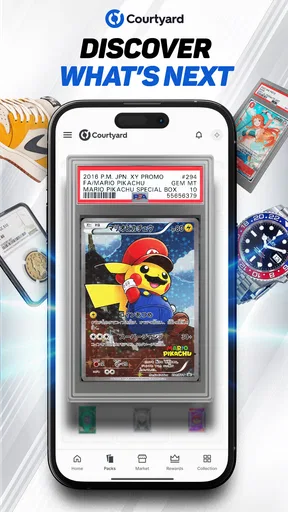
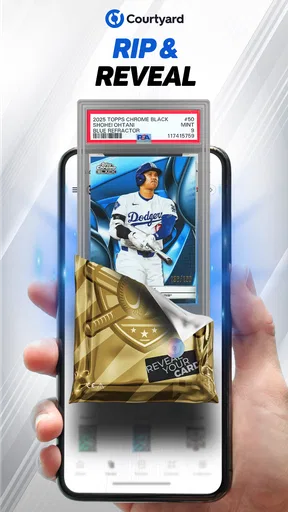
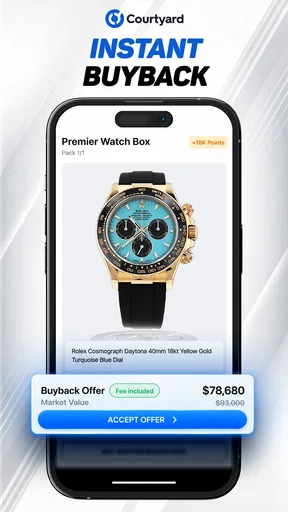
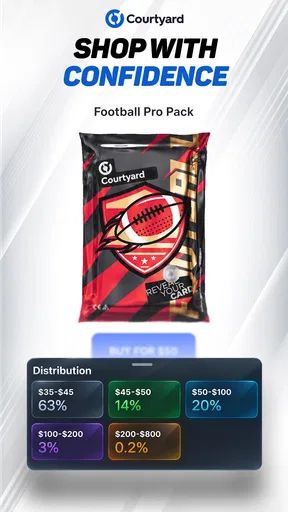
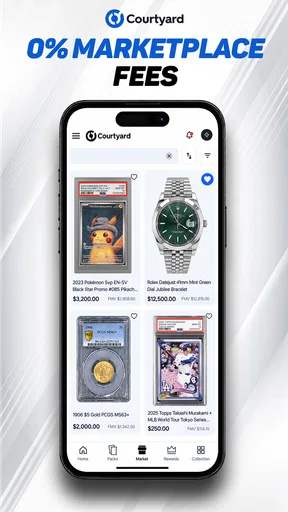
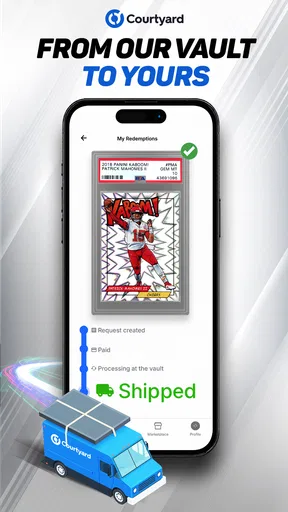
Our Review of Courtyard - Trading Cards
 Analysis by Appyee
I found Courtyard - Trading Cards most interesting when I treated it less like a conventional shopping app and more like a digital doorway into physical collectibles. It brings together Pokémon, baseball, NFL items, comics, and coins under one shopping-focused experience, which makes it appealing if your interests cross several collecting communities. My overall view is positive, but with an important qualification: this is best for people who already enjoy collectible culture and are comfortable making careful buying decisions, not for someone looking for a simple general marketplace.
The app is free to download, and Courtyard.io is the developer behind it. Its mature age rating is worth noticing before installing, especially if you are considering it for a younger collector. The current version is 1.7.00, and it runs on Android 7.0 or later. That broad operating-system support makes it accessible on many older Android phones, although the experience still depends heavily on how comfortably you can browse images, descriptions, and purchase details on your particular device.
What makes the shopping experience stand out
The clearest strength is focus. Instead of presenting ordinary retail products, the app is built around categories where condition, authenticity, scarcity, and personal interest matter. Pokémon cards can attract one kind of collector, while baseball or NFL memorabilia may appeal to someone else. Comics and coins add another layer, so the app does not force you into a single hobby.
I like that combination because it encourages browsing by curiosity. Someone who opens the app looking for a specific card may discover a comic or coin that fits the same collecting mindset. That cross-category design is more useful than it first appears: collectors often compare how different physical objects hold value, how they are preserved, and how much research is needed before buying.
Its store summary mentions Pokémon, Baseball, NFL, Comics, and Coins, and that range gives the app a distinctive identity. It is not simply another place to search for one trading-card set. The experience is more suitable for users who enjoy exploring several types of collectibles, even if one category remains their main reason for installing it.
The app also has enough public traction to suggest that it is not an obscure experiment. It has passed one hundred thousand installs, with an average rating of 4.2 from roughly two thousand six hundred ratings. I would not treat those numbers as a guarantee of a perfect shopping experience, but they do provide useful context: enough people have tried it to make the app worth evaluating seriously rather than dismissing it as a niche curiosity.
When I use a collectible marketplace, I want the browsing process to help me slow down rather than encourage an impulsive purchase. That is especially important with cards and memorabilia, where two items that look similar at a glance can have very different appeal to a collector. My practical advice is to decide what you are collecting before you start browsing. Choose a theme, player, franchise, era, character, or condition preference, and then use the app to investigate within that boundary.
A better way to browse than simply chasing the newest item
A useful workflow is to separate discovery from buying. On the first pass, I would look through categories and note which items genuinely fit my collection. On the second pass, I would compare the item with alternatives elsewhere, check whether the condition and edition details match what I want, and only then decide whether the purchase makes sense. This two-step habit is particularly valuable in Courtyard because the app’s appeal comes from collectible discovery, and discovery can easily turn into unplanned spending.
Another practical tip is to think in terms of a collection plan rather than isolated purchases. If you collect Pokémon, for example, decide whether your goal is a character-focused group, a set-completion project, or a small selection of cards that you personally enjoy. If you collect sports items, decide whether you care more about a team, a player, a season, or visual appeal. The app can be enjoyable for all of these approaches, but it cannot make that decision for you.
The same principle applies to comics and coins. These categories can attract buyers for very different reasons: nostalgia, design, historical interest, investment hopes, or the simple pleasure of owning something unusual. I would use the app as a place to find candidates, not as a substitute for learning the terminology and standards of the category. A collector who understands what they are seeking will get far more value from the browsing experience than someone who buys only because an item looks rare.
Where the app fits beside ordinary alternatives
Compared with a general online marketplace, Courtyard feels more purposeful because its subject matter is concentrated around collectibles. A broad marketplace may offer more unrelated listings and familiar everyday shopping tools, but it can also make specialist items harder to evaluate. Courtyard’s narrower identity is its advantage when you want to stay inside the world of cards, sports, comics, and coins.
Compared with a specialist forum or local collector group, the app is likely to feel more convenient for browsing available items in one place. However, community-based alternatives can be better when you want detailed discussion, personal negotiation, or advice from someone who knows a particular set or player exceptionally well. I would not replace a trusted collector community with the app; I would use both for different jobs.
Compared with visiting a physical card shop or collectibles show, the app is easier for casual browsing and useful when you do not have a specialist store nearby. A physical setting still has advantages that a mobile screen cannot fully reproduce. You may be able to inspect an item more closely, ask direct questions, compare pieces side by side, and learn from the people around you. Courtyard is strongest for convenient discovery, while in-person collecting remains valuable for inspection and conversation.
That comparison explains my central opinion. Courtyard is not automatically the best option for every collectible purchase. It is a focused shopping companion for people who want a digital way to explore several collectible categories. The right choice depends on whether convenience and range matter more to you than direct inspection, negotiation, or community guidance.
The most important limitation is the need for buyer discipline
The main weakness is not that the app covers too many categories; it is that variety can make it harder to maintain a clear collecting purpose. Pokémon, sports, comics, and coins each require different knowledge. A user may understand trading cards well but know very little about coins, or recognize a famous athlete without understanding what makes a specific piece desirable. The app’s broad scope is exciting, but it also increases the need for independent judgment.
I would be cautious about treating any collectible as an automatic investment. Personal enjoyment, condition, demand, authenticity, and long-term interest are separate questions. A visually impressive item may be perfect for your collection without being a sensible purchase for financial reasons. Before spending, I would write down why I want the item and what would make me regret buying it. That small pause can prevent the common mistake of confusing excitement with value.
There is also a natural screen-based limitation. Collectibles are physical objects, yet the first decision is made through a digital presentation. Images and descriptions can help you narrow your choices, but they do not replace careful attention to condition and item details. If you are buying something expensive or unusually important to your collection, I would take more time than I would for a casual purchase and compare the listing with specialist references or advice from an experienced collector.
Another point is the mature rating. I would not hand the app to a child simply because trading cards are often associated with younger audiences. The rating signals that the shopping environment should be approached as an adult-oriented service, and parents should make their own decision about whether it is appropriate for a particular teenager. It is also wise to keep purchasing decisions separate from a child’s enthusiasm, since collectible browsing can make rare-looking items feel more urgent than they really are.
A realistic everyday use case
Imagine that I have a small Pokémon collection and want to spend a quiet evening looking for one piece that fits it. I would open Courtyard, browse the relevant items, and avoid buying immediately. I would save notes about the cards that match my theme, then compare their condition, presentation, and price with what I already own. If nothing feels right, I would close the app without forcing a purchase. That is a successful use of the app even when no transaction happens, because it helps me refine what I actually want.
For a sports collector, the same process might begin with a favorite baseball or NFL team. Rather than searching broadly and reacting to every interesting listing, I would define a narrow target, such as a particular player or type of memorabilia, and use the app to see what catches my attention. The benefit is not merely finding an item; it is learning how the available selection compares with the shape of my existing collection.
A comic or coin collector could use the app differently. The goal might be to discover an object with a design or historical connection that feels personally meaningful. In that case, I would spend more time researching the background of the category before purchasing. Courtyard can begin the search, but the best decision will still come from combining the app’s browsing convenience with knowledge gathered elsewhere.
Who will enjoy it most, and who should skip it
I would recommend Courtyard - Trading Cards to collectors who want one mobile destination for Pokémon, baseball, NFL, comics, and coins. It is especially suitable for someone who enjoys browsing across categories, already has a collecting theme, and is willing to verify details before spending. The free entry point makes it easy to explore without committing to a subscription just to see whether the selection suits your interests.
It can also work well for a returning collector. If you collected cards years ago and want to reconnect with the hobby, the app offers a convenient starting point for seeing what kinds of items are available now. I would still suggest beginning with a modest goal rather than trying to rebuild an entire collection in one session.
I would recommend a different route for someone who wants the lowest possible prices, direct negotiation, or extensive peer advice. A general marketplace may offer more sellers, while local shops and collector groups can provide conversation and hands-on inspection. Likewise, if you are interested in only one highly specialized area, a dedicated platform or specialist dealer may offer deeper expertise than a multi-category app.
The app is also not ideal for a person who dislikes research. Collectibles reward patience, and the wider the category range, the more important it becomes to understand what you are seeing. If you want a straightforward shopping experience where products are easy to compare by standard specifications, ordinary retail apps will probably feel simpler. Courtyard is for a more interpretive kind of shopping, where personal taste and subject knowledge matter.
Installation details and my final recommendation
Courtyard - Trading Cards is a free shopping app from Courtyard.io, released on July 4, 2025. It supports Android 7.0 and later, carries a mature 17+ rating, and its current version is 1.7.00. Those details make it straightforward to try on a compatible Android device, but I would still approach the app with the same care I bring to any marketplace involving collectibles.
My final verdict is that Courtyard succeeds because it gives collectible browsing a clear home without limiting itself to one fandom. Its strongest feature is the combination of Pokémon, baseball, NFL, comics, and coins, while its biggest challenge is asking users to bring their own knowledge and spending discipline. I would recommend it to an adult collector who wants convenient discovery and understands that an attractive listing is only the beginning of a good buying decision.
My advice is simple: use Courtyard to find possibilities, then use patience and research to decide. If that sounds like your style, the app is worth exploring. If you want guaranteed bargains, expert guidance at every step, or the ability to physically inspect everything before buying, a specialist shop, collector community, or broader marketplace may serve you better.
Verdict
Strengths of Courtyard - Trading Cards
- Clean interface makes browsing and managing cards straightforward.
- Supports collecting cards digitally without needing physical storage space.
- Useful for tracking cards and keeping a personal collection organized.
- Convenient access to your collection from a mobile device.
- Good option for users who prefer a focused card-collecting experience.
Limitations of Courtyard - Trading Cards
- The app may feel limited for users seeking advanced trading tools.
- Collection value can depend heavily on available card sets and updates.
- Some features may require an account or internet connection to use.
- Digital cards may not appeal to collectors who prefer physical ownership.
- Performance and loading times can vary on older devices.
Similar Picks in This Category
View All
SHEIN-Shopping Online
Roadget Business PTE. LTD.4.8

Amazon Shopping
Amazon Mobile LLC4.4


Mercado Libre: Compras online
Mercado Libre4.8

Wish: Shop and Save
Wish US Holdings LLC4.7

Alibaba.com - B2B marketplace
Alibaba Mobile4.4
Frequently Asked Questions
What is Courtyard - Trading Cards?
Courtyard - Trading Cards is a digital collectibles platform focused on trading cards and other collectible items. It allows users to discover, purchase, trade, and manage card-based collectibles through a mobile-friendly experience. Before downloading, users should understand that availability, supported collections, and marketplace features may vary by region and can change as the platform develops.
Do I need an account or a digital wallet to use Courtyard?
You generally need to create an account to browse the platform fully, manage collectibles, and use buying or trading features. Depending on the collection and transaction method, Courtyard may also require or support a digital wallet. New users should review the sign-up process, identity requirements, wallet compatibility, and recovery options before committing funds or transferring assets.
Can I buy and sell trading cards through the app?
Courtyard is designed to support the discovery and exchange of digital trading cards, although the exact buying, selling, and marketplace functions may depend on the current app version and the collection involved. Check item prices, transaction fees, payment methods, resale rules, and availability carefully. Collectible values can fluctuate, so purchases should not be treated as guaranteed investments.
Are the trading cards physical, digital, or both?
The platform primarily presents trading cards as digital collectibles, but some collections may be connected to physical cards or real-world items depending on the product terms. Ownership, redemption, shipping, and storage conditions can differ between collections. Read each listing carefully to confirm what you receive, whether a physical item is included, and how redemption or delivery works.
Is Courtyard - Trading Cards safe and free to download?
Downloading the app from an official Google Play or Apple App Store listing is normally free, but using the marketplace may involve purchases, transaction charges, network fees, or other costs. As with any collectibles platform, protect your login details, use a strong password, and verify every transaction before confirming it. Also review privacy permissions, refund policies, and customer-support options.
